
Castle Island anchors Pleasure Bay Beach at the northern tip of a 3-mile stretch of South Boston beaches looking out onto Dorchester Bay.
At the top, historic Fort Independence overlooks the Boston Harbor Islands, offering gorgeous views and usually a cool breeze.
For a special, "Boston Insider" experience, visit Castle Island on July 4, when "Old Ironsides" - the USS Constitution - makes her annual turn-around cruise from Charlestown Navy Yard.
Once she reaches the fort, she turns and fires a 21-gun salute to the nation to commemorate the fight for independence.
Famed landscape designer Frederick Law Olmsted designed Pleasure Bay Beach next to Castle Island in the 1800s as a marine park, a jewel in his "Emerald Necklace" of green space surrounding Boston.
Pleasure Bay includes 22 acres offering some of the best views in this part of Boston.
Best of all, you can get here in 15 minutes or less from the city.
In this article, we cover 11 fun things to do at Castle Island - the perfect Boston getaway for a warm, sunny day.
Photo credit: Castle Island's Fort Independence and Pleasure Bay
Boston Discovery Guide is a reader-supported publication. When you buy through our links, we may earn a commission at no additional cost for you. Learn more
Is There a Castle on Castle Island?
No. But the first fort to be built on the island back in 1634 was called a "castle with mud walls." (The "castle" part was probably meant to be humorous.)
The fort did not last long, nor did its replacements.
In the late 1600s, a fifth fort was be built on this site and named "Castle William," presumably in honor of King William III, who, along with his wife Mary II, ruled England during that period.
The island, which at that time was still a real island unattached to the mainland, was called Castle William Island. Castle William boasted over 70 cannons at the time of the Boston Tea Party in 1773.
Once the Revolutionary War and the Seige of Boston began, British forces turned Castle William into their headquarters.
Although the British thought the island gave them a tactical advantage due to its position looking out over Boston Harbor, George Washington and the Continental Army out-maneuvered them by placing cannons at an even higher location.
Washington forced them to evacuate Boston, but the fleeing Redcoats set the fort on fire as a parting gesture.
After the Brits departed, the island continued to be called "Castle Island" - but the new fort, quickly rebuilt on the site of the old one in 1776, was initially called Fort Adams and then renamed Fort Independence in 1797.
11 Fun Things to Do at Castle Island
1. Stroll Around Castle Island on Harborwalk & the Causeway
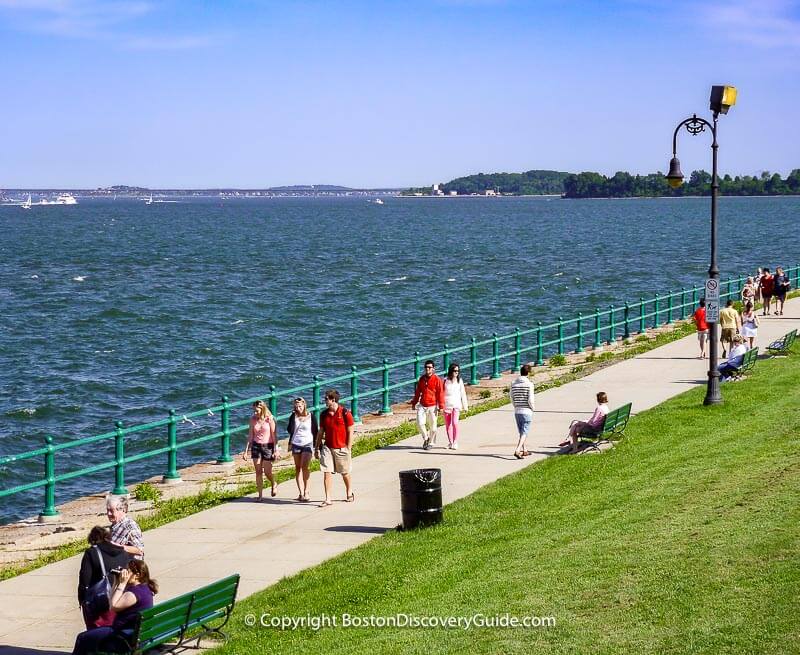
Most people come to Castle Island to enjoy the views, have a picnic, and stroll along Harborwalk, which circles almost half of the island before merging with Head Island Causeway down at the island's bottom tip.
The Causeway circles around around Pleasure Bay itself.
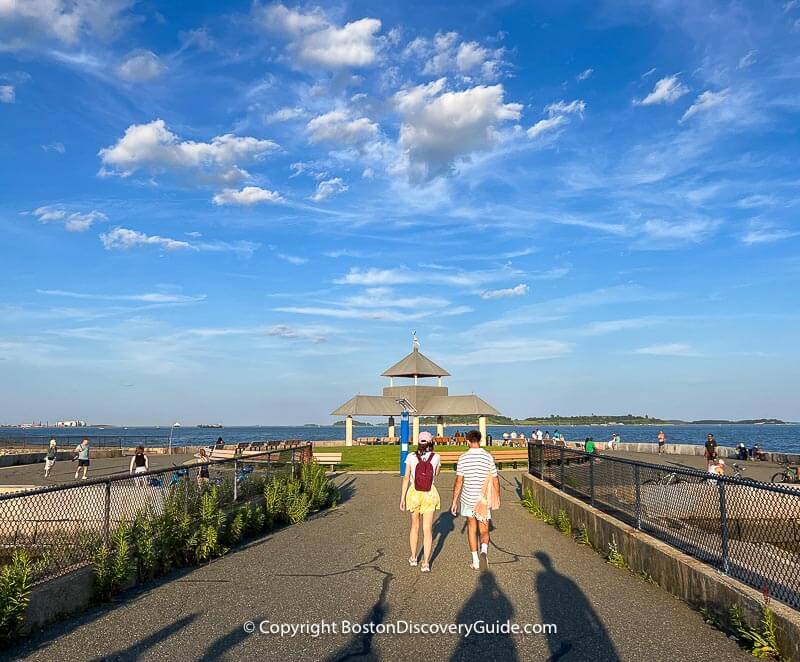
If you walk around the Causeway, you can relax on one of the benches near the gazebo on tiny Head Island and enjoy the spectacular views of the Harbor and the Boston Harbor Islands.
You can see both Harborwalk, the Causeway, and Head Island on the Castle Island map below, although you may need to zoom in a bit to find it, and then zoom out again to see how far it goes.
2. Swim and Relax at Castle Island Beach
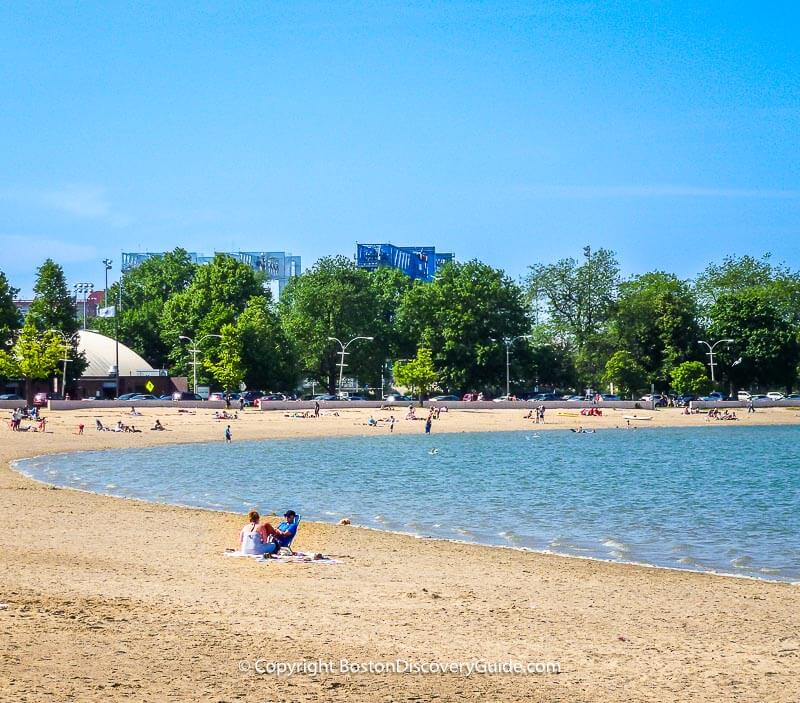
Although Castle Island does have a tiny sandy beach on its western edge overlooking the protected calm water of Pleasure Bay, there's a much better, bigger, and sandier beach called "Pleasure Bay Beach" on the other side of the beach.
Pleasure Bay Beach is only about a 3-minute walk from Castle Island's smaller beach, so that's where most people go to spread their blankets on the sand, splash in the water, or relax on an inflatable float (bring your own if you want to do this).
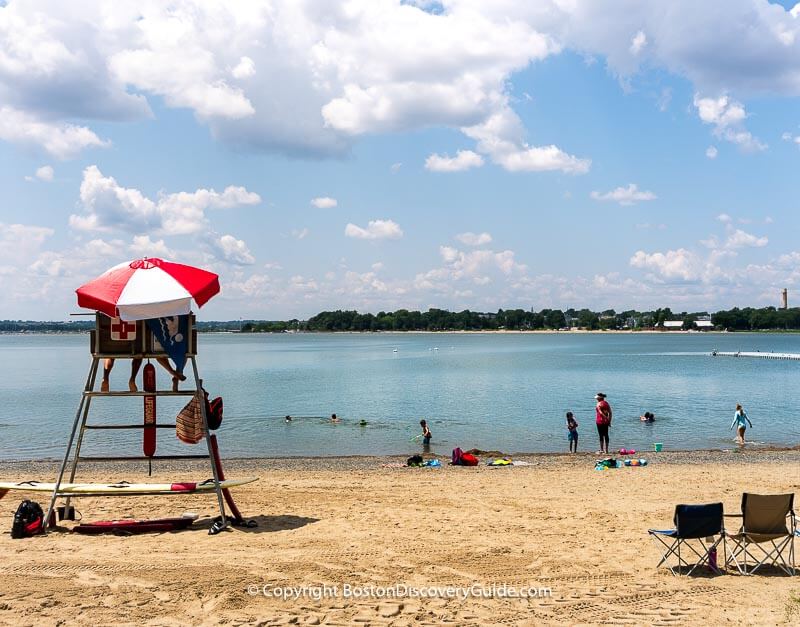
As you can see from the map below, Pleasure Bay Beach circles around to the west and south of Castle Island, offering protected swimming areas along the sandy edges of the lagoon.
Even though the beach is awesome, just be aware that the beaches further south along Day Boulevard offer whiter sand, lifeguards, and reportedly fewer jellyfish.
So if you're spending the day at Castle Island and have the time, walk down and explore what these South Boston beaches have to offer.
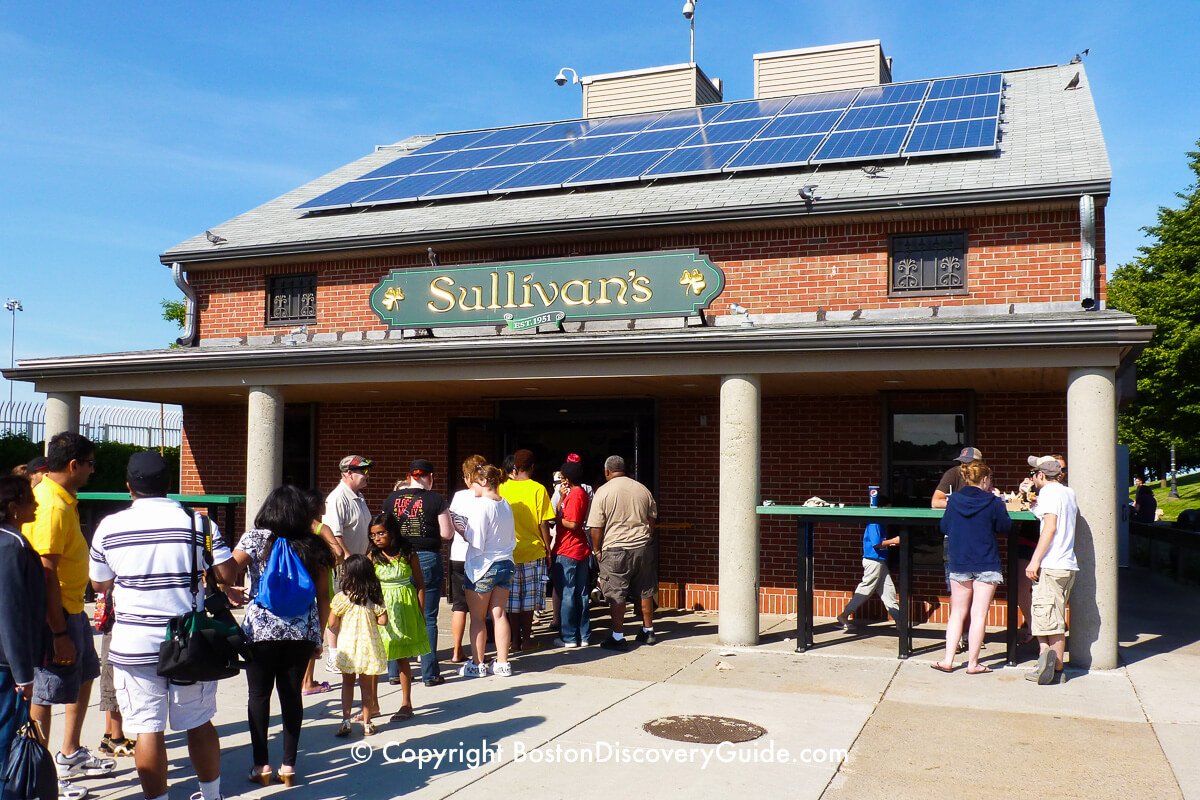
Inhale the salt breeze, stroll over to the legendary Sully's for fried clams and ice cream, and soak up some sun. For an even bigger treat, splurge on fried clam strips, chowder, or a lobster roll.
What's the right date to head out to Castle Island in the spring? For a lot of folks, that magic moment happens on the day when Sully's opens for the season - usually the end of February or early March.
We usually announce the date in our February or March events calendar - but if you miss it, you can also check Sully's website.
3. Watch Airplanes Land and Take Off
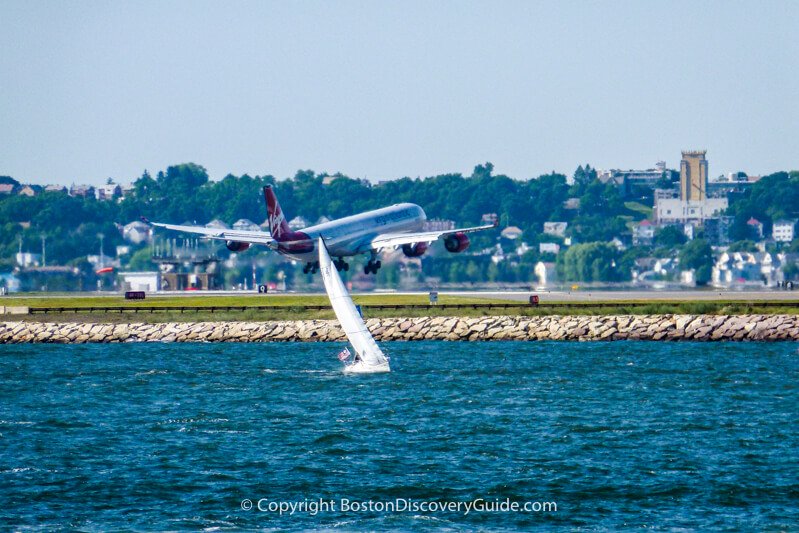
Castle Island's location almost directly across from Boston Logan Airport means you can watch planes swoop down over the water and land on the runway - big hit with kids! And truthfully? Adults too.
The flights give everyone a thrilling show while landing because you're very close to where they fly low to the ground right before touching down.
In case you're wondering why the white inflatable buoy you can see in above the photo is in the channel, its presence there has nothing to do with the planes or the airport - it helps ships navigate safely through the channel.
4. Visit the Playground
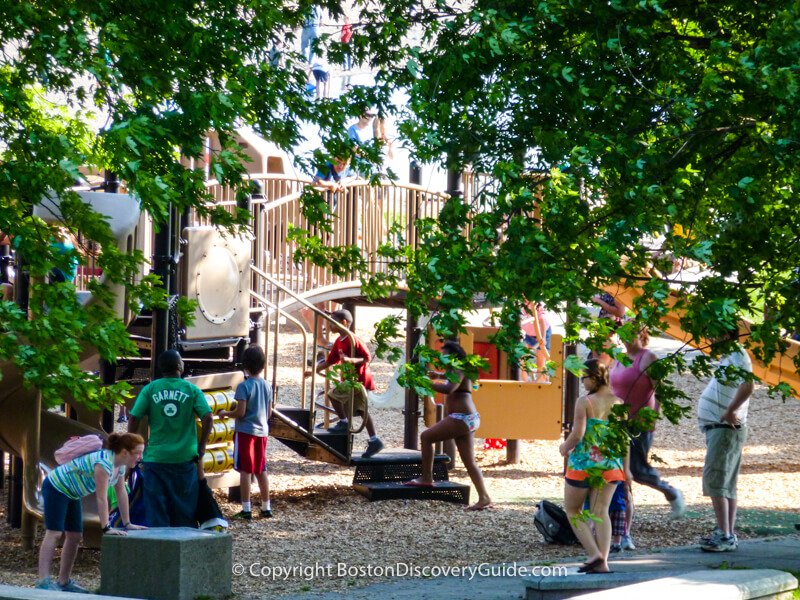
If you're visiting with young children, head to the small fenced playground near the beach. This area probably ties with the beach as "favorite part of Castle Island" with the 3-years-old to 10-years-old set.
It's also one of the best places on the island to find a bit of shade, if you need a break from the beach. (Keep in mind that Fort Independence usually produces good shade too except right at noon.)
5. Explore Fort Independence
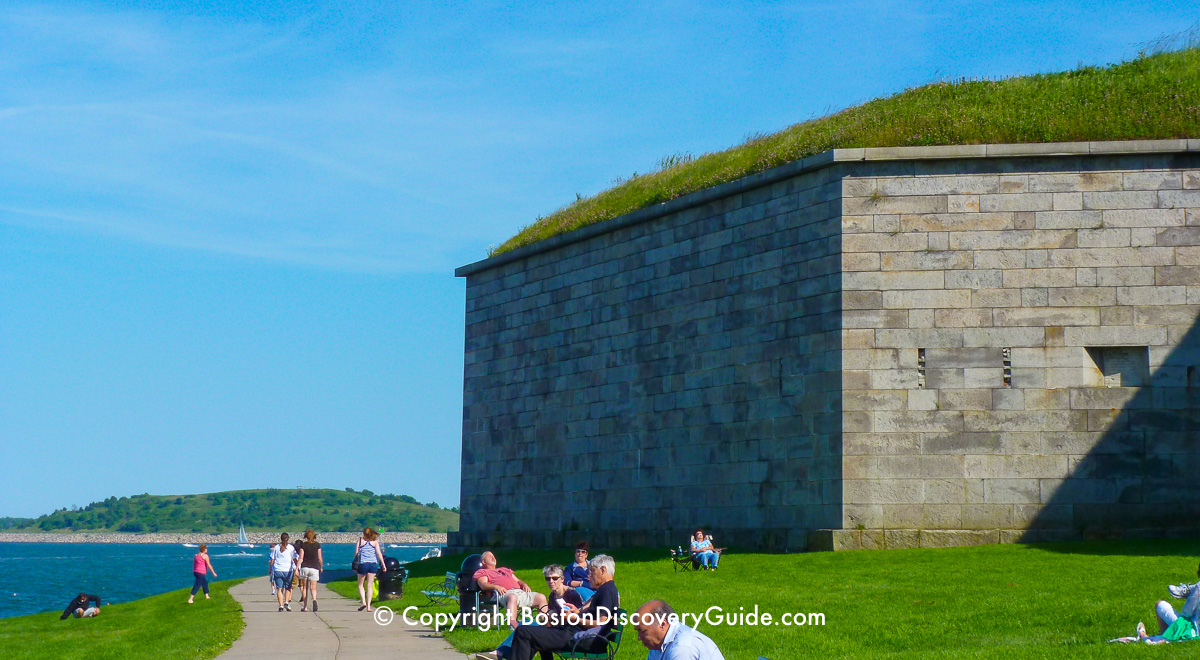
Although Fort Independence is open to the public, access to go inside is normally by tour only.
You can join free half-hour tours of Fort Independence on most Saturdays and Sundays between Memorial Day and Labor Day, usually from noon - 3:30pm. During June and July, the fort is also open for viewing from 7pm to sunset. In September and October up through Columbus Day weekend, tours take place only on Sundays.
The tours normally get canceled during severe weather, such as summer thunderstorms.
You can also walk on top of the fort (be careful!) without a tour guide for city skyline twilight viewings on most Thursday evenings during the summer.
6. Check Out Other Historic Sights
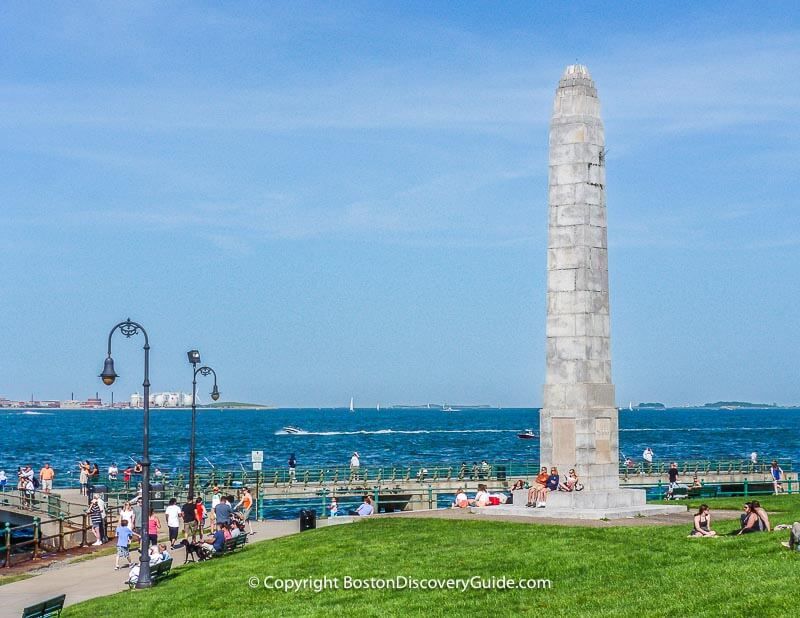
The most strikiing historical site on Castle Island is an obelisk erected in 1933 as a memorial to a famous East Boston ship builder, Donald McKay, who became famous due to the clipper ships that he built.
In particular, he became famous for building the Great Republic, which at that time was believed to be the biggest ship in the world. At least half a dozen of his clipper ships broke world records for speed.
According to the inscriptions along all four sides of the monument, McKay brought world-wide recognition to American clipper ships and "brought reknown and prosperity to the city of Boston." During his lifetime, he built about 65 ships,
7. Play Frisbee, Fly a Kite ... Or, Just Play
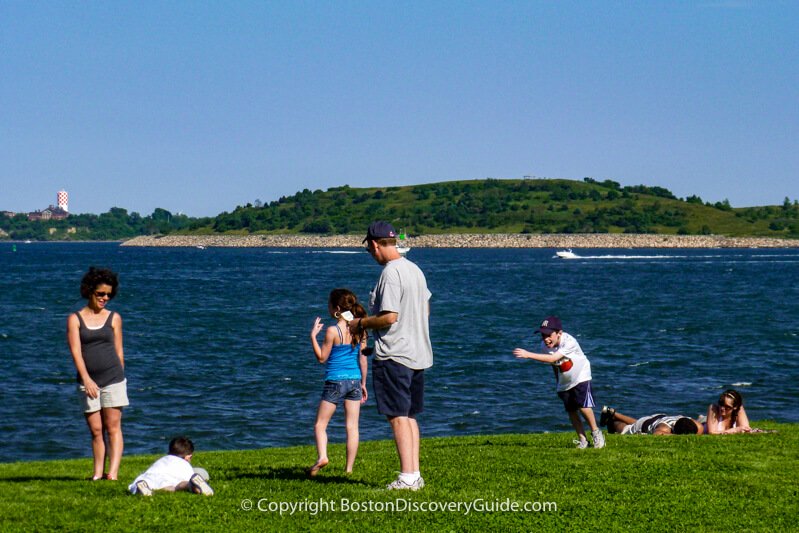
Castle Island's grassy slopes provide the perfect setting for all kinds of family fun - tossing a frisbee and even playing ball games (bring your own lightweight wiffle balls or child-friendly portable croquet sets.
If you're coming with older kids, consider bringing a kite.
Castle Island Map
8. See Castle Island & the Harbor Islands from the Water
Want to see Castle Island, Boston Harbor, and the Boston Harbor Islands up close from the water? These sightseeing cruises take you past a variety of the islands
9. Watch Boston's Fireworks from Castle Island

Castle Island may not be the "perfect" place to view Boston's July 4th fireworks.
After all, the fireworks' usual launch spot in the Charles River is almost 3 miles away and a good-sized chunk of downtown Boston buildings will be between you and the launch site.
However, you can still see a lot.
Arrive early enough to stake out your spot, and as a bonus, you can see fireworks from a couple of other nearby communities as well.
On the other hand, Castle Island gives you excellent views of Boston's First Night fireworks, as these are launched over Boston Harbor - providing you with a straight light of vision. (Please note that the New Year's Eve fireworks do NOT happen every year; check the December Events calendar to see if they're listed.)
Most of the million or so celebrators who flood into Boston for New Year's Eve festivities congregate in areas closer to the First Night events and NYE parties to watch the fireworks, so you can usually find a great fireworks viewing spot at Castle Island relatively easily.
10. Visit the World War II Memorial near Castle Island
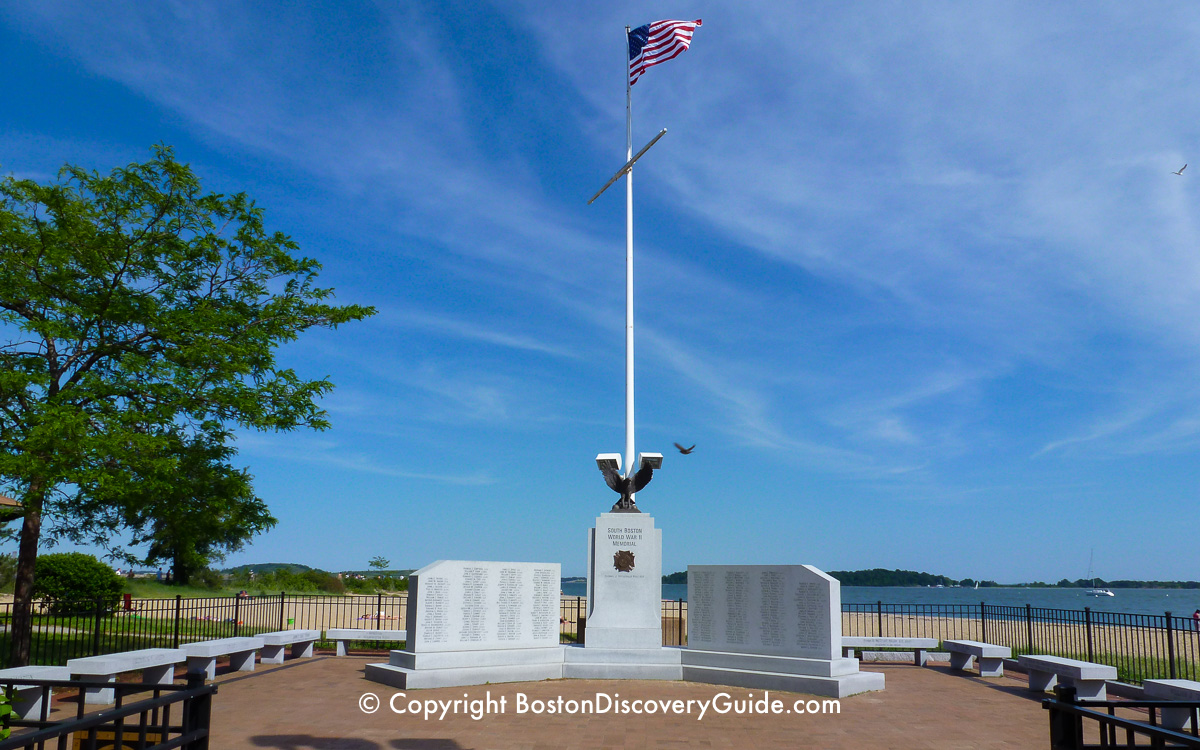
Near the beginning of the narrow causeway leading out to Castle Island from Pleasure Bay Beach, you'll see one of Boston's newer war memorials.
The 2 large granite blocks flank an American flag.
Walk over and you'll see that it is a memorial to South Boston residents who died fighting in the war.
More about the South Boston World War II Memorial
11. Go Sailboarding by the Causeway
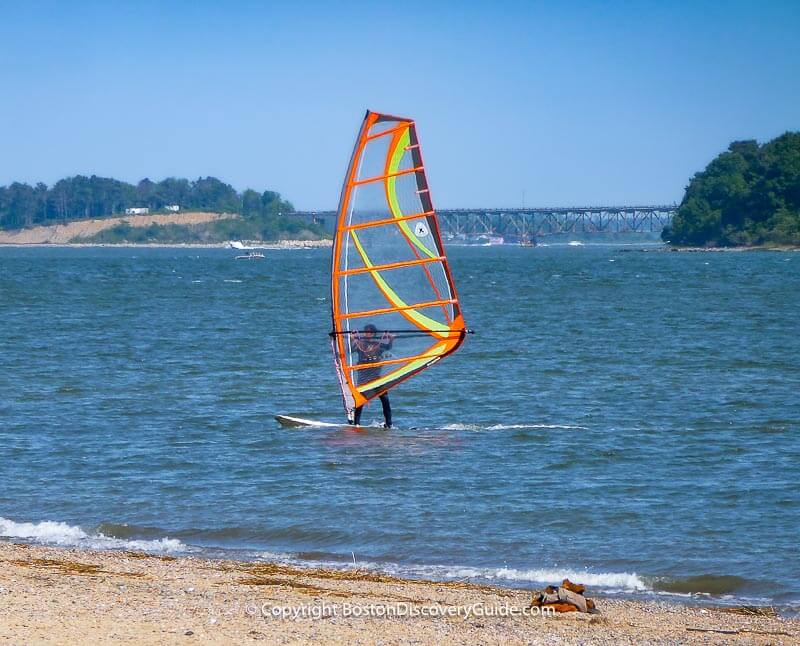
Altlhough the best beaches for swimming lie within the protected waters of Pleasure Island Bay, windsurfers head to the beach outside of the bay on the south side of the Causeway.
With the Harbor Islands in the background, it's the ideal spot to try wind surfing.
How to Get to Castle Island and Fort Independence
To get to Castle Island from Boston, hop on the Number 9 bus at Copley, get off at City Point, and then walk out to Castle Island.
Alternately, rent a bike from Boston's bike share program (you'll see them in racks all over the city) and ride out. Castle Island's location just a couple of miles from Downtown Boston makes it the area's most popular beach.
Castle Island, Pleasure Bay Beach, and the other South Boston beaches are free to the public - no admission charge.
Fort Independence on Castle Island - Views & Tours
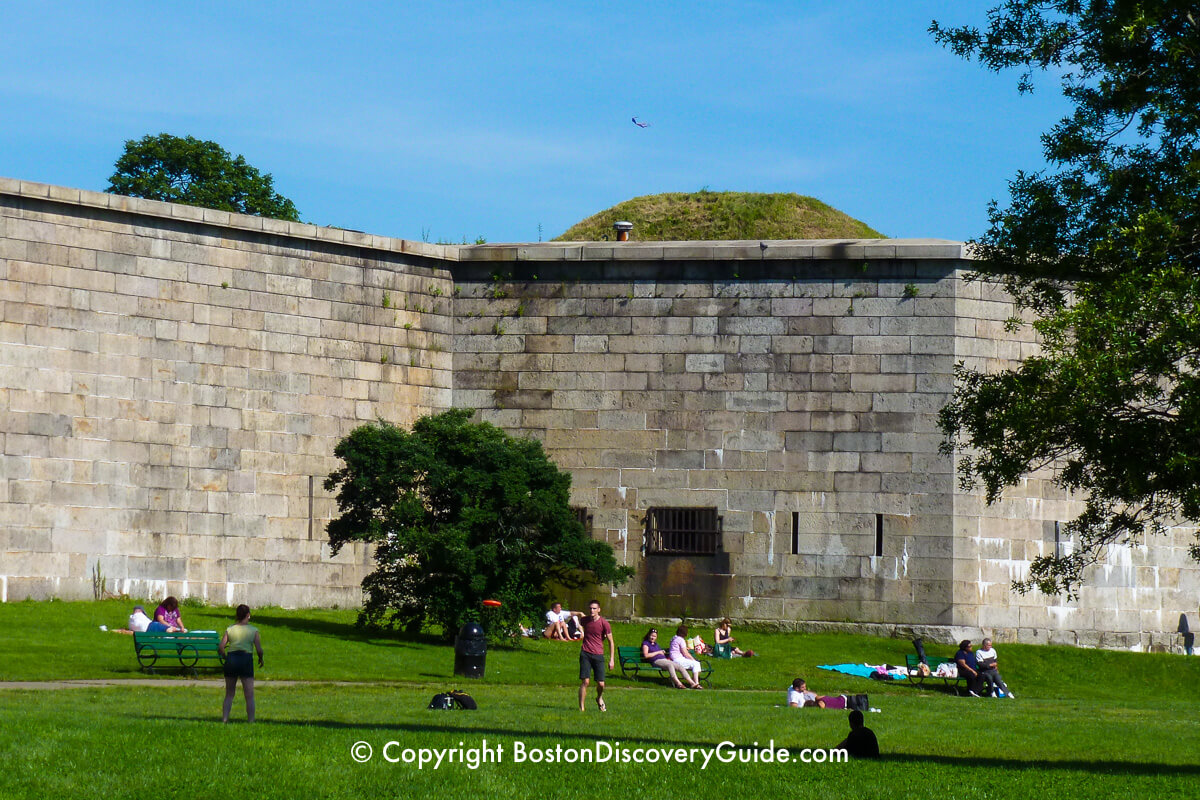
At the top of Castle Island stands Fort Independence, a massive 5-pointed gray granite structure built between 1834 and 1851.
What you see when you visit is actually the 8th fort to occupy this site. British troops destroyed the fifth one, built in 1634, as they fled Boston during the Revolutionary War.
Fort Independence prevented British naval attacks during the War of 1812 because of its strategic location.
Boston Insider Literary Tip
Boston-born fiction writer and poet Edgar Allan Poe served at Fort Independence in 1827 after lying about his age and enlisting in the U.S. Army as "Edgar A. Perry."
Literary rumors cite the old fort or a story Poe heard while stationed there as inspiration for his famous 1846 chiller, The Cask of Amontillado.
More Fun Things to Do in Boston
More Articles about Things to Do in Boston in the Summer
- Boston Harbor Islands - Only 15 minutes away by ferry, you'll find a different world - plus beaches!
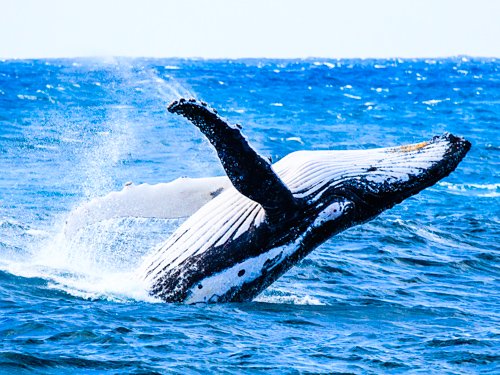
- Boston whale watching cruises - Watch whales and other sea mammals play
- South Boston Waterfront - You won't find beaches, but the views along Harborwalk and the waterfront restaurants and bars are terrific
- Day trips from Boston - Want to get away from the city for a day or even a weekend? Here are some interesting places to consider
Need a Boston Hotel or Apartment?
Use this handy map from Booking.com to find the perfect place to stay. Just enter your dates to find what's available, see the best rates, and make your reservations.